When it comes to static guarding, the difference between a professional security operation and a vulnerable site often lies in the patrol methods employed. At Mango Solutions Limited, we understand that effective patrolling isn’t just about walking around; it’s a strategic approach that combines vigilance, unpredictability, and systematic communication to create an impenetrable security blanket.
Understanding Static Guarding Patrols
Static guarding involves maintaining security at a fixed location whilst conducting regular patrols of the premises. Unlike mobile security services that cover multiple sites, static guards are responsible for the comprehensive protection of a single location, making their patrol methodology absolutely crucial to the site’s overall security integrity.
The modern security landscape demands more than just a visible presence. Today’s static guards must be tactical thinkers, employing sophisticated patrol strategies that deter criminal activity whilst ensuring complete coverage of their assigned area. This requires a deep understanding of both the theoretical principles and practical applications of professional security patrolling.
The Do’s of Professional Static Guarding Patrols
DO Maintain Situational Awareness
Professional static guards must develop heightened situational awareness during every patrol. This means actively observing your environment, noting changes in lighting, sounds, or the positioning of objects. Train yourself to spot anomalies; whether it’s an open window that should be closed, unfamiliar vehicles in the car park, or unusual sounds emanating from specific areas.
Your eyes and ears are your primary tools. Develop the habit of scanning systematically rather than casually glancing around. Look up at rooflines and windows, check ground-level entry points, and pay attention to areas that might provide concealment for potential intruders.
DO Document Everything Thoroughly
Comprehensive documentation is the backbone of professional static guarding. Every patrol should be logged with precise timing, observations, and any incident; no matter how minor they may seem must be logged in the Daily Occurrence Book/Log. This documentation serves multiple purposes: it provides evidence of your diligence, creates a historical record for pattern analysis, and ensures continuity between shift changes.
Use technology to your advantage. Modern security operations like ours at Mango Solutions utilise advanced reporting systems that allow real-time documentation and GPS verification of patrol routes. This not only proves your presence at specific locations but also provides valuable data for optimising future patrol strategies.
DO Vary Your Patrol Routes and Timing
Predictability is the enemy of effective security. Professional static guards must resist the temptation to follow the same route at the same times. Instead, develop multiple patrol routes that cover all areas whilst varying your approach to each zone.
Create at least three different routes through your site, each taking different amounts of time and covering areas in varying sequences. This unpredictability makes it impossible for potential intruders to time their activities around your movements. Remember, criminals often conduct surveillance before attempting a breach. Don’t make their job easier by being predictable.
DO Engage with Technology Effectively
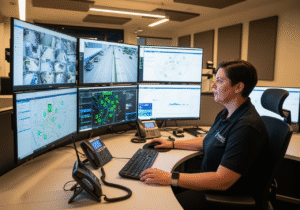
Modern static guarding relies heavily on technology integration. Familiarise yourself with all security systems on your site, including CCTV networks, alarm systems, access control mechanisms, and communication devices. Understanding how these systems work together creates a comprehensive security web that’s far more effective than any single component.
At Mango Solutions, our static guards utilise network radios for constant communication and GPS tracking systems that verify patrol completion. These tools aren’t just for monitoring, they’re force multipliers that enhance your effectiveness and ensure rapid response when needed.
DO Maintain Physical Fitness and Mental Alertness
Static guarding can be physically and mentally demanding. Long shifts require sustained concentration, and the ability to respond quickly to incidents demands good physical condition. Maintain your fitness levels and develop strategies for staying mentally sharp throughout extended periods.
Take brief moments during patrols to perform simple exercises that keep you alert; shoulder rolls, deep breathing, or brief stretching can help maintain focus. However, never compromise your vigilance for personal comfort.
DO Build Relationships with Legitimate Site Users
Professional static guards should develop positive relationships with regular site users, employees, contractors, delivery personnel, and authorised visitors. These relationships create an informal intelligence network that can provide valuable information about unusual activities or potential security concerns.
However, maintain professional boundaries. Being friendly doesn’t mean being casual about security protocols. Always verify credentials and follow proper procedures, regardless of how well you know someone.
The Don’ts of Static Guarding Patrols
DON’T Establish Predictable Patterns
The most critical mistake static guards make is falling into predictable routines. Never patrol at exactly the same times or follow identical routes shift after shift. Criminals are patient and observant, they will identify patterns and exploit them.
Avoid checking the same locations in the same sequence, taking breaks at predictable times, or conducting patrols at regular intervals. Even well-intentioned habits like always starting patrols on the hour can create vulnerabilities that experienced criminals will notice and exploit.
DON’T Neglect Communication Protocols
Failing to maintain regular communication with your control room or supervisory team is a serious breach of professional standards. Never assume that “no news is good news” or skip scheduled check calls because “nothing’s happening.”
Communication protocols exist for your safety and the security of the site. They provide verification that you’re alert and capable of responding, and they ensure rapid assistance if something goes wrong. At Mango Solutions, our guards use Smarttask for hourly check calls and network radios for continuous communication capability with SOS functionality.
DON’T Compromise Your Position
Never position yourself in locations where you can be easily cornered or where your view of escape routes is blocked. Maintain tactical awareness of your positioning during patrols, ensuring you always have multiple exit options and clear sightlines to potential threat areas.
Avoid standing directly in front of doorways or windows where you might be silhouetted against interior lighting. Don’t linger in dead-end corridors or isolated areas where backup couldn’t reach you quickly. Your positioning should always prioritise both observation capability and personal safety.
DON’T Use Personal Devices During Patrols
Personal mobile phones, music players, or other devices that divide your attention have no place during active patrol duties. These distractions can prevent you from hearing important sounds, noticing visual cues, or responding quickly to developing situations.
If you must use communication devices, use only those provided by your employer and only for work-related purposes. Your complete attention should be focused on your security responsibilities throughout your patrol.
DON’T Ignore Minor Anomalies
Small irregularities often precede major security incidents. Never dismiss minor changes or unusual observations as unimportant. That slightly ajar door, the unfamiliar car parked in an unusual location, or the sound that doesn’t quite fit the normal site ambience could be indicators of a developing security situation.
Professional static guards investigate anomalies thoroughly and report them appropriately. What seems minor to you might be significant when combined with other observations or intelligence available to your supervisory team.
DON’T Patrol Alone Without Backup Plans
While static guarding often involves working alone, you should never patrol without established backup and emergency procedures. Ensure you understand escalation protocols, know how to summon assistance quickly, and have clear procedures for different types of incidents.
Never attempt to handle situations beyond your training or authority. Your role is to observe, report, and deter—not to engage in confrontations that could escalate dangerously.
The Critical Importance of Random Timing and Routes
Defeating Criminal Surveillance
Criminals rarely act impulsively when targeting commercial or industrial sites. Professional thieves, vandals, and other threats typically conduct surveillance to identify security weaknesses and timing patterns. By maintaining random patrol schedules and routes, static guards eliminate the predictability that criminals rely upon for successful operations.
Random timing means that potential intruders can never be certain when a guard will appear in any given area. This uncertainty creates a psychological deterrent that’s often more effective than physical barriers. When criminals cannot predict security presence, they’re far less likely to attempt unauthorised access.
Maximising Coverage Efficiency
Random patrol routes ensure that all areas of a site receive appropriate attention without creating neglected zones. When guards follow the same routes repeatedly, certain areas may receive excessive coverage whilst others are inadvertently under-monitored.
By varying routes, guards ensure comprehensive site coverage and prevent the development of security blind spots. This approach also helps guards notice changes or anomalies that might be missed when following familiar patterns—fresh perspectives often reveal new security considerations.
Maintaining Guard Alertness
Repetitive routines can lead to complacency and reduced vigilance. Random patrol patterns keep guards mentally engaged by requiring active decision-making about routes and timing. This mental engagement translates directly into improved observation skills and faster response times to developing situations.
Varied routines also prevent the psychological fatigue that comes from repetitive tasks. When guards must think actively about their next move, they remain more alert and observant throughout their shift.
Creating Operational Intelligence
Random patrol patterns generate valuable intelligence about site vulnerabilities and optimal security strategies. By approaching areas from different directions and at various times, guards can identify potential security weaknesses that might not be apparent from routine approaches.
This intelligence gathering helps refine security strategies and identify areas requiring additional attention or physical security improvements. Over time, this data-driven approach creates increasingly effective security coverage tailored to each site’s specific requirements.
The Vital Role of Check Calls in Static Guarding
Personal Safety Assurance
Check calls serve as a critical safety net for lone workers in static guarding positions. Regular communication with control rooms or supervisory personnel ensures that help will be summoned quickly if a guard encounters difficulties or becomes incapacitated.
At Mango Solutions, we implement hourly check calls through our Smarttask system, providing automated monitoring that triggers alerts if guards fail to report. This system ensures that no guard is left without support for extended periods, regardless of the circumstances they might encounter.
Incident Verification and Response
Regular check calls provide real-time verification of site conditions and guard status. This communication allows control rooms to maintain current situational awareness and coordinate appropriate responses to developing incidents.
When guards report observations or concerns during check calls, supervisory personnel can provide guidance, coordinate additional resources, or escalate matters to appropriate authorities. This real-time communication capability transforms isolated static guards into integral components of comprehensive security networks.
Professional Accountability
Check call systems provide verification that guards are actively performing their duties rather than sleeping, leaving their posts, or engaging in non-work activities. This accountability protects both the security company and the client by ensuring contracted services are being delivered as promised.
Modern check call systems like Smarttask provide GPS verification and timestamping that creates an auditable trail of guard activities. This documentation protects professional guards who perform their duties diligently whilst identifying those who may require additional training or supervision.
Operational Coordination
Check calls enable coordination between static guards and other security elements—mobile patrols, alarm monitoring centres, and emergency responders. This coordination ensures that static guards aren’t operating in isolation but as part of integrated security operations.
When incidents occur, check call systems allow rapid deployment of additional resources and ensure that all security personnel have current information about developing situations. This coordination capability can mean the difference between successfully managing an incident and allowing it to escalate beyond control.
Implementing Professional Check Call Procedures
Timing and Frequency
Professional check call procedures require careful balance between security effectiveness and operational efficiency. Hourly check calls provide adequate monitoring for most static guarding situations whilst allowing guards sufficient time for thorough patrols between communications.
However, high-risk sites or situations may require more frequent communication. Guards should understand when to increase check call frequency based on threat levels, environmental conditions, or specific incidents that may be developing.
Content and Clarity
Effective check calls convey essential information clearly and concisely. Guards should report their location, any observations or concerns, and confirm their operational status. Standardised reporting formats ensure that critical information isn’t overlooked and that communication remains professional and efficient.
At Mango Solutions, our guards are trained to provide structured reports that include location verification, environmental observations, equipment status, and any security concerns. This systematic approach ensures comprehensive information transfer during brief communication windows.
Technology Integration
Modern check call systems integrate multiple technologies to provide comprehensive monitoring capabilities. GPS tracking verifies guard locations, automated timing systems ensure regular communication, and digital reporting platforms create permanent records of all interactions.
Our Smarttask system exemplifies this integration, providing automated check call reminders, GPS verification, and immediate alerts when guards fail to report. This technology enhances rather than replaces human judgment, providing tools that make professional guards more effective.
Advanced Patrol Strategies for Static Guards
Zone-Based Security Approaches
Professional static guards should divide their sites into security zones based on risk levels, access requirements, and vulnerability assessments. High-risk areas—such as cash handling locations, sensitive equipment storage, or primary access points—require more frequent attention than low-risk zones.
Develop zone-specific patrol procedures that address the unique security requirements of each area. This might include specific observation points, particular attention to certain types of anomalies, or specialised equipment checks relevant to each zone’s function.
Environmental Adaptation
Effective patrol methods must adapt to changing environmental conditions. Weather, lighting, seasonal variations, and site activity levels all influence optimal patrol strategies. Professional guards adjust their approaches based on these factors whilst maintaining comprehensive security coverage.
During adverse weather conditions, for example, guards might need to modify routes to ensure safety whilst maintaining security effectiveness. Similarly, seasonal changes in daylight hours require adjustments to patrol timing and observation techniques.
Integration with Physical Security Systems
Static guards should understand how their patrols integrate with physical security systems—CCTV networks, alarm systems, access control mechanisms, and perimeter barriers. Effective patrols complement these systems rather than simply duplicating their coverage.
Use CCTV systems to extend your observation capability, but don’t rely on them exclusively. Understand alarm system coverage and ensure your patrols fill any gaps in automated monitoring. Coordinate with access control systems to verify that entry points are properly secured and that any access anomalies are investigated promptly.
Building Professional Competence
Continuous Learning and Development
Professional static guards must commit to continuous learning and skill development. Security threats evolve constantly, and effective guards must stay current with new techniques, technologies, and best practices.
Regular training updates, professional development courses, and industry networking help guards maintain peak performance levels. At Mango Solutions, we encourage our team to pursue additional qualifications and stay informed about industry developments that might affect their effectiveness.
Physical and Mental Preparation
Effective static guarding requires both physical capability and mental resilience. Guards must maintain fitness levels appropriate to their responsibilities and develop mental strategies for staying alert during long, potentially monotonous shifts.
Develop personal routines that help maintain focus throughout your shift. This might include specific observation exercises, mental checklists for different patrol phases, or techniques for staying physically comfortable without compromising vigilance.
Conclusion: Excellence in Static Guarding
Professional static guarding represents the foundation of comprehensive security operations. By implementing proper patrol methods, maintaining unpredictable patterns, and utilising effective check call procedures, static guards create security environments that deter criminal activity whilst providing rapid response capability when incidents occur.
At Mango Solutions Limited, we’re committed to delivering the highest standards of static guarding services. Our tech-driven approach, combined with rigorous training and professional procedures, ensures that our clients receive security coverage that exceeds industry standards.
Remember, effective static guarding isn’t just about following procedures—it’s about understanding the strategic importance of your role and executing your responsibilities with the professionalism and diligence that modern security demands. Every patrol you conduct, every check call you make, and every observation you report contributes to a comprehensive security operation that protects people, property, and peace of mind.
The security industry continues to evolve, but the fundamental principles of professional static guarding remain constant: vigilance, unpredictability, communication, and unwavering commitment to excellence. By mastering these elements, static guards become invaluable assets in the ongoing effort to maintain safe, secure environments for everyone.
About Mango Solutions Limited
Mango Solutions Limited provides comprehensive security services across the UK, including static guarding, mobile patrols, keyholding and alarm response, and lone worker monitoring. Our tech-driven approach combines traditional security expertise with cutting-edge technology to deliver superior protection for commercial and domestic clients.
For more information about our static guarding services or to discuss your security requirements, contact us at 02382 028802 or visit www.mangosolutions.uk.