In today’s challenging economic climate, businesses across the UK are scrutinising every expense whilst still maintaining robust security standards. One area where significant savings can be achieved without compromising protection is through outsourced security control room services. Let’s explore how smart organisations are cutting costs whilst enhancing their security capabilities.
The Hidden Costs of In-House Control Rooms
Running an internal security control room is far more expensive than most businesses initially realise. Beyond the obvious staffing costs, there’s a web of hidden expenses that can quickly spiral out of control.
Staffing Challenges and Costs
Maintaining 24/7 coverage requires a minimum of five full-time equivalent staff members to account for holidays, sickness, and shift patterns. With the current UK security industry facing recruitment challenges, salaries for qualified control room operators have increased significantly. The average salary for an experienced control room operator now ranges from £25,000 to £35,000 annually, with senior operators commanding even higher rates.
Add employer National Insurance contributions at 13.8%, pension contributions under auto-enrolment schemes, and comprehensive training costs, and you’re looking at substantial annual expenditure. Many businesses underestimate the true cost of employment, which typically adds 25-30% on top of base salaries when all factors are considered.
Recruitment and Retention Challenges
Finding qualified control room operators is increasingly difficult. The skills shortage in the security industry means longer recruitment periods, higher agency fees, and increased competition for experienced staff. Staff turnover in security roles averages 15-20% annually, creating ongoing recruitment costs and training expenses for replacement personnel.
Technology Infrastructure Investment
Modern control rooms require sophisticated technology stacks including CCTV monitoring systems, alarm management platforms, communication equipment, and backup systems. The initial capital expenditure for professional-grade equipment can easily reach six figures, with ongoing maintenance and upgrade costs adding thousands annually.
Professional monitoring workstations alone can cost £15,000-£25,000 each when properly specified with multiple monitors, ergonomic furniture, and integrated communication systems. Video management software licences, alarm receiving equipment, and backup systems add substantial additional costs.
Premises and Utilities
Dedicated control room facilities require specific environmental conditions including climate control, backup power systems, and enhanced security measures. Monthly utilities, insurance premiums for sensitive equipment, and premises costs can easily exceed £2,000 monthly for a properly equipped facility.
Compliance and Training Requirements
SIA licensing requirements, ongoing professional development, and regular compliance audits create additional administrative burdens. Each operator needs initial training costing £1,500-£3,000, regular refresher courses, and specialised certifications for different monitoring systems.
Maintaining compliance with British Standards such as BS 8418 for remote centres and BS 7499 for static guarding services requires ongoing investment in procedures, documentation, and regular audits.
The Smart Alternative: Remote Control Room Services
Forward-thinking businesses are discovering that remote control room services offer a compelling alternative that delivers superior results at a fraction of the cost.
Immediate Cost Reduction
By partnering with a professional remote monitoring service, businesses can eliminate the need for dedicated on-site staff, expensive equipment purchases, and ongoing maintenance contracts. This typically results in cost savings of 40-60% compared to in-house operations.
Consider a typical mid-sized business currently spending £180,000 annually on in-house monitoring (including staff, equipment, premises, and overheads). Switching to professional outsourced monitoring could reduce this to £70,000-£90,000 annually whilst improving service quality.
Access to Cutting-Edge Technology
Professional monitoring centres invest heavily in the latest technology because it’s their core business. This means access to advanced systems like AJAX monitoring, HIK Vision CCTV integration, and sophisticated alarm management platforms without the capital expenditure.
These facilities typically feature redundant internet connections, uninterruptible power supplies, and backup generators—infrastructure that would cost individual businesses tens of thousands to implement properly.
Scalability and Flexibility
Remote monitoring services can easily scale up or down based on your business needs. Whether you’re expanding operations, adding new sites, or streamlining during quieter periods, you only pay for the services you actually require.
This flexibility is particularly valuable for businesses with seasonal variations or those undergoing expansion. Rather than investing in additional equipment and staff that may only be needed temporarily, outsourced services can accommodate changing requirements immediately.
Real-World Benefits: Beyond Cost Savings
Whilst cost reduction is often the primary driver, businesses discover numerous additional benefits when switching to outsourced monitoring.
Enhanced Response Times
Professional monitoring centres typically achieve faster response times than in-house operations. With dedicated staff focused solely on monitoring and response coordination, incidents are identified and addressed more quickly.
Industry-leading providers achieve alarm acknowledgement within 30 seconds and response coordination within 2 minutes—significantly faster than typical in-house operations where staff may be handling multiple responsibilities.
Improved Reliability
Outsourced providers have redundant systems, backup power supplies, and disaster recovery procedures that would be prohibitively expensive for individual businesses to implement. This ensures continuous monitoring even during equipment failures or emergencies.
Professional facilities maintain 99.9% uptime through multiple internet connections, backup power systems, and alternative communication methods. This level of reliability is virtually impossible to achieve cost-effectively with in-house operations.
Expertise and Specialisation
Professional monitoring centres employ specialists who understand the nuances of different alarm systems, CCTV technologies, and response protocols. This expertise translates into more accurate threat assessment and appropriate response escalation.
Operators receive ongoing training on new technologies, threat recognition, and emergency procedures. This specialised knowledge ensures incidents are handled professionally and efficiently, reducing false alarms whilst ensuring genuine threats receive appropriate attention.
Reduced False Alarm Rates
Experienced operators can distinguish between genuine security threats and false alarms caused by environmental factors, equipment malfunctions, or user error. This expertise significantly reduces unnecessary callouts and associated costs.
Professional monitoring centres typically achieve false alarm rates of less than 5%, compared to 15-20% common with less experienced operators. This reduction saves substantial costs in unnecessary response fees and reduces disruption to business operations.
Making the Transition: What to Consider
Service Level Agreements
Ensure your chosen provider offers clear SLAs covering response times, system availability, and escalation procedures. Look for guarantees around maximum response times and compensation for service failures.
Key metrics should include alarm acknowledgement times (typically 30 seconds), response coordination times (usually 2 minutes), and system availability (minimum 99.5%). Penalty clauses for service failures provide additional assurance of consistent performance.
Integration Capabilities
Your outsourced provider should seamlessly integrate with your existing security infrastructure. This includes CCTV systems, access control, alarm panels, and any specialised monitoring equipment.
Modern monitoring centres can integrate with virtually any alarm system or CCTV platform, but it’s essential to verify compatibility before committing. Integration testing should be conducted during the transition period to ensure smooth operation.
Reporting and Analytics
Modern remote monitoring services provide detailed reporting and analytics that help optimise your security posture. Look for providers offering real-time dashboards, incident reports, and trend analysis.
Comprehensive reporting should include response times, incident classifications, false alarm analysis, and recommendations for system improvements. This data helps businesses understand their security risks and optimise their protection strategies.
Communication Protocols
Establish clear communication procedures for different types of incidents. This includes escalation matrices, contact details for key personnel, and specific instructions for various scenarios.
Professional monitoring centres can accommodate complex escalation procedures, including different contacts for different types of incidents, time-based escalation rules, and integration with existing business communication systems.
Technology Integration: The Modern Approach
Today’s outsourced security control room services leverage advanced technology to deliver superior monitoring capabilities.
AJAX System Integration
Modern wireless alarm systems like AJAX offer sophisticated monitoring capabilities with real-time status updates, tamper detection, and detailed event logging. Professional monitoring centres can fully utilise these advanced features.
AJAX systems provide detailed information about each activation, including signal strength, battery levels, and environmental conditions. This data helps monitoring operators make informed decisions about response requirements and system maintenance needs.
Smart Surveillance Solutions
Integration with HIK Vision and other leading CCTV manufacturers enables intelligent video analytics, automated threat detection, and efficient incident verification. This technology-driven approach reduces false alarms whilst improving genuine threat detection.
Advanced video analytics can detect specific behaviours such as loitering, perimeter breaches, or unusual movement patterns. This intelligent analysis helps prioritise genuine security threats whilst filtering out routine activities that don’t require response.
Mobile Integration
Advanced monitoring services include mobile apps and SMS alerts, ensuring key personnel are immediately notified of incidents regardless of their location.
Modern mobile integration provides real-time status updates, incident photos, and direct communication with monitoring operators. This connectivity ensures business owners and security managers stay informed even when away from their premises.
Cloud-Based Platforms
Cloud-based monitoring platforms offer enhanced reliability, automatic updates, and seamless integration with multiple sites. These systems provide real-time access to security data from any location whilst maintaining robust security protocols.
The Future of Security Monitoring
The security industry is rapidly evolving towards cloud-based, AI-enhanced monitoring solutions. Remote control room services are at the forefront of this evolution, offering businesses access to cutting-edge capabilities without the need for significant internal investment.
Artificial Intelligence Integration
AI-powered video analytics can distinguish between genuine security threats and false alarms caused by weather, animals, or equipment malfunctions. This reduces unnecessary callouts whilst ensuring real threats receive immediate attention.
Machine learning algorithms continuously improve threat detection accuracy by analysing patterns and learning from historical data. This evolution means monitoring systems become more effective over time without requiring manual updates or configuration changes.
Predictive Analytics
Advanced monitoring platforms can identify patterns and trends that help prevent incidents before they occur. This proactive approach represents the future of security management.
Predictive analytics can identify potential equipment failures, unusual activity patterns, or security vulnerabilities before they become serious problems. This foresight enables preventive maintenance and proactive security improvements.
Internet of Things Integration
Smart building technologies and IoT sensors are creating new monitoring opportunities. Professional monitoring centres are best positioned to integrate and manage these diverse data streams effectively.
IoT integration can include environmental monitoring, access control systems, fire detection, and building management systems. This comprehensive approach provides holistic facility monitoring beyond traditional security applications.
Measuring Success: Key Performance Indicators
When evaluating the success of your transition to outsourced monitoring, focus on these critical metrics:
Response Time Improvements
Track the time from initial alarm activation to first response. Professional monitoring centres typically achieve sub-two-minute response times for alarm acknowledgement and rapid escalation to appropriate responders.
Detailed response time analysis should include alarm acknowledgement, verification procedures, and response coordination. These metrics provide clear evidence of service quality improvements compared to previous arrangements.
False Alarm Reduction
Quality monitoring services should significantly reduce false alarm rates through better system management and intelligent filtering. This saves costs on unnecessary callouts and reduces disruption to your operations.
Monitor false alarm trends over time to identify patterns and opportunities for system improvements. Professional monitoring centres should provide recommendations for reducing false alarms through equipment adjustments or procedural changes.
Cost Per Incident
Calculate the total cost per security incident, including monitoring fees, response costs, and administrative overhead. Most businesses see substantial reductions when switching to professional monitoring services.
Comprehensive cost analysis should include direct monitoring fees, response costs, false alarm charges, and internal administrative time. This total cost comparison demonstrates the financial benefits of professional monitoring services.
System Availability
Monitor the percentage of time your security systems are fully operational and connected to the monitoring centre. Professional services should achieve 99.5% or higher availability.
System availability metrics help identify potential infrastructure improvements and ensure consistent security coverage. Regular availability reporting provides assurance that your security investment is delivering expected protection levels.
Common Concerns Addressed
“Will We Lose Control?”
Many businesses worry about losing control over their security operations. Quality outsourced providers offer comprehensive reporting, real-time dashboards, and regular consultations to ensure you maintain full visibility and control over your security posture.
Professional monitoring services actually provide greater visibility through detailed reporting and analytics that would be difficult to achieve with in-house operations. Regular service reviews ensure your specific requirements continue to be met as your business evolves.
“What About Data Security?”
Professional monitoring centres operate under strict data protection protocols and are typically more secure than in-house operations. These facilities implement comprehensive cyber security measures including encrypted communications, secure data storage, and regular security audits.
Data protection compliance includes GDPR requirements, secure data transmission protocols, and controlled access to sensitive information. Professional monitoring centres invest significantly more in cyber security than most individual businesses can justify.
“Can They Handle Our Specific Requirements?”
Experienced monitoring providers work with businesses across diverse sectors and can accommodate specific requirements, protocols, and escalation procedures. The key is choosing a provider with relevant experience and flexible service offerings.
Customisation capabilities should include specific response procedures, integration with existing business systems, and accommodation of unique operational requirements. Professional providers design services around client needs rather than forcing clients to adapt to standard procedures.
“What Happens During Service Disruptions?”
Professional monitoring centres maintain multiple communication paths and backup systems to ensure continuous service even during major disruptions. This includes backup internet connections, alternative communication methods, and disaster recovery procedures.
Service continuity planning should include detailed procedures for various disruption scenarios, backup communication methods, and alternative monitoring arrangements if required. These preparations ensure your security coverage continues even during exceptional circumstances.
Implementation Best Practices
Phased Transition
Consider implementing outsourced monitoring in phases, starting with less critical systems and gradually expanding coverage. This allows you to build confidence in the service whilst minimising disruption.
A phased approach enables testing of integration procedures, communication protocols, and response arrangements before committing fully to the new service. This gradual transition reduces risks and allows for adjustments based on initial experience.
Staff Redeployment
Rather than simply eliminating positions, consider redeploying internal security staff to more value-added roles such as physical patrols, access control management, or security consulting.
Staff redeployment can include training for enhanced security roles, customer service positions, or facility management responsibilities. This approach maintains valuable institutional knowledge whilst reducing overall security costs.
Regular Reviews
Schedule quarterly reviews with your monitoring provider to assess performance, discuss improvements, and ensure the service continues to meet your evolving needs.
Regular service reviews should include performance metrics analysis, cost-benefit assessment, and discussion of new technologies or service enhancements. These reviews ensure your monitoring service evolves with your business requirements.
Documentation and Procedures
Maintain comprehensive documentation of monitoring procedures, contact details, and escalation protocols. This documentation should be regularly updated and accessible to all relevant personnel.
Proper documentation ensures consistent response procedures and provides backup information if primary contacts are unavailable. Regular updates ensure accuracy and relevance as business circumstances change.
The Environmental Impact
Outsourced monitoring also delivers environmental benefits that align with corporate sustainability goals. Shared monitoring facilities are more energy-efficient than multiple individual control rooms, reducing overall carbon footprint whilst maintaining security standards.
Professional monitoring centres achieve economies of scale in energy consumption, equipment utilisation, and facility management. This efficiency reduces environmental impact compared to multiple smaller facilities whilst often providing superior service levels.
Carbon Footprint Reduction
Eliminating individual control rooms reduces energy consumption for climate control, lighting, and equipment operation. Professional monitoring centres achieve better energy efficiency through optimised facility design and shared infrastructure.
Equipment Life Cycle Management
Professional monitoring centres implement comprehensive equipment life cycle management, ensuring optimal utilisation and proper disposal of electronic equipment. This approach reduces electronic waste compared to individual facility management.
Looking Ahead: Industry Trends
The security monitoring industry continues to evolve rapidly. Cloud-based platforms, IoT integration, and mobile-first approaches are becoming standard. By partnering with a forward-thinking monitoring provider, businesses can access these innovations without significant internal investment.
5G Connectivity
The rollout of 5G networks will enable even more sophisticated monitoring capabilities, including high-definition video streaming, real-time analytics, and enhanced mobile integration.
5G technology will support more responsive monitoring systems with reduced latency and increased bandwidth for video transmission. This enhanced connectivity will enable new monitoring capabilities whilst improving existing service quality.
Advanced Analytics
Machine learning and artificial intelligence will continue to improve threat detection accuracy and reduce false alarm rates. These technologies will enable more sophisticated analysis of security data and predictive threat assessment.
Integration Platforms
Unified monitoring platforms will integrate multiple security systems, building management systems, and business applications. This integration will provide comprehensive facility monitoring beyond traditional security applications.
Conclusion: The Strategic Advantage
Transitioning to outsourced security control room services represents more than just a cost-saving measure—it’s a strategic decision that can enhance your security posture whilst freeing up resources for core business activities.
The combination of cost reduction, improved technology access, enhanced reliability, and professional expertise makes outsourced monitoring a compelling choice for businesses of all sizes. As the security landscape continues to evolve, partnering with a specialist monitoring provider ensures your business stays ahead of emerging threats whilst maintaining cost-effective operations.
The question isn’t whether you can afford to outsource your monitoring—it’s whether you can afford not to. With potential cost savings of 40-60% and significant improvements in service quality, outsourced monitoring represents one of the most effective security investments available to modern businesses.
How Mango Solutions Can Transform Your Security Operations
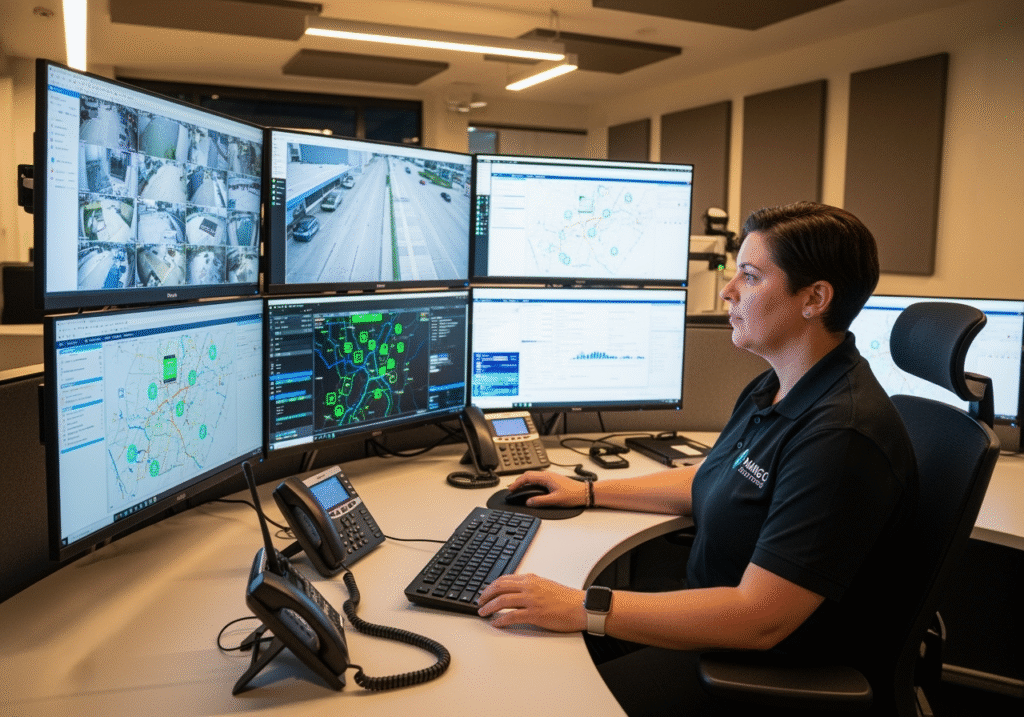
At Mango Solutions, we understand the challenges businesses face in maintaining effective, cost-efficient security monitoring. Our state-of-the-art 24/7 control room combines cutting-edge technology with experienced, SIA-licensed operators to deliver comprehensive monitoring solutions that significantly reduce your security costs whilst enhancing protection.
Our Advanced Technology Stack:
- AJAX wireless alarm system integration with real-time status monitoring
- HIK Vision CCTV monitoring with intelligent analytics and automated threat detection
- SmartTask lone worker monitoring with automated check calls and GPS tracking
- Real-time incident reporting with photographic evidence and detailed logs
- Redundant communication systems with automatic fail over to backup systems
Why Choose Mango Solutions:
- Professional Expertise: All operators hold SIA licences and receive ongoing specialist training on the latest security technologies
- Cost-Effective Solutions: Eliminate the need for expensive in-house infrastructure and staffing whilst improving service quality
- Comprehensive Coverage: From alarm response to lone worker monitoring, we provide complete security solutions
- Proven Reliability: 24/7/365 operations with robust backup systems and disaster recovery procedures
- Advanced Technology: State-of-the-art monitoring equipment with redundant internet connections and UPS backup power
- Flexible Service Options: Scalable solutions that adapt to your changing business requirements
Our Service Advantages:
- Experienced Team: Our control room operators average over 5 years of security monitoring experience
- Multi-System Integration: Seamless compatibility with existing CCTV, access control, and alarm systems
- Detailed Reporting: Comprehensive incident reports with photographic evidence and trend analysis
- Proactive Monitoring: We don’t just react to alarms—we actively monitor for potential security issues
- Local Knowledge: Based in Hampshire with extensive knowledge of local response networks and procedures
Real Client Results: Our clients typically experience:
- 45% reduction in overall security costs within the first year
- 60% improvement in response times compared to previous arrangements
- 80% reduction in false alarm rates through intelligent monitoring
- 99.7% system availability with our redundant monitoring infrastructure
Ready to discover how much you could save whilst improving your security? Our team of experts can conduct a comprehensive assessment of your current security costs and demonstrate the significant savings available through our professional monitoring services.
Take Action Today: Visit our 24/7 Control Room services page to learn more about our comprehensive monitoring solutions and request your free cost-benefit analysis.
Don’t let expensive in-house monitoring drain your resources—let Mango Solutions deliver superior security at a fraction of the cost. Contact us today to discuss how we can transform your security operations whilst significantly reducing your costs.