Solar energy has revolutionised the way we think about power generation. Across the UK, vast solar farms stretch across countryside landscapes, silently converting sunlight into clean electricity. However, with this green revolution comes an unexpected challenge: the dramatic rise in solar farm theft and vandalism.
Recent industry reports show that solar farm theft has increased by over 300% in the past five years, with criminals targeting everything from copper cables to entire solar panels. For solar farm operators, this isn’t just about replacing stolen equipment – it’s about protecting substantial investments, maintaining energy output, and ensuring the long-term viability of renewable energy projects.
Understanding the Scale of the Problem
Why Solar Farms Are Attractive Targets
Solar farms present unique security challenges that make them particularly vulnerable to criminal activity. Unlike traditional power stations with established security protocols, many solar installations were designed with minimal security considerations.
The remote locations of most solar farms work against them. Positioned away from populated areas to maximise land use efficiency, these sites often lack natural surveillance from nearby residents or businesses. This isolation provides criminals with the time and privacy needed to carry out sophisticated theft operations.
The valuable materials used in solar installations create strong incentives for theft. Copper wiring, aluminium frames, and the solar panels themselves command high prices on black markets. A single solar panel can be worth several hundred pounds, whilst copper cables contain materials that can be quickly sold to scrap dealers.
Common Types of Solar Farm Crime
Cable Theft Copper cable theft represents the most frequent and costly form of solar farm crime. Thieves target the extensive network of cables that connect panels to inverters and transmission equipment. These cables contain high-grade copper that’s easily transportable and valuable to scrap dealers.
Panel Theft Entire solar panels are increasingly being stolen, particularly from sites with inadequate security. Modern panels are designed to be relatively easy to remove for maintenance purposes, which unfortunately makes them equally easy for criminals to steal.
Inverter Theft Power inverters, which convert DC electricity from panels into AC electricity for the grid, are high-value targets. These sophisticated electronic devices can be worth thousands of pounds each and are often inadequately secured.
Vandalism and Sabotage Not all solar farm crime is motivated by financial gain. Some incidents involve deliberate damage to equipment, graffiti, or sabotage that can shut down entire installations for extended periods.
The True Cost of Solar Farm Crime
The financial impact of solar farm theft extends far beyond the replacement cost of stolen equipment. When criminals steal cables or damage panels, entire sections of solar farms can be rendered inoperable for weeks or months.
Lost energy production during downtime can cost operators tens of thousands of pounds per incident. Insurance claims, increased premiums, and security upgrades add additional financial burdens. Some operators report that security costs now represent up to 15% of their annual operational expenses.
The psychological impact on local communities shouldn’t be overlooked either. Solar farms are often seen as symbols of environmental progress and community investment. When these installations are repeatedly targeted by criminals, it can damage public confidence in renewable energy projects.
Comprehensive Security Solutions for Solar Farms
Physical Security Measures
Perimeter Protection Effective solar farm security begins with robust perimeter protection. Traditional chain-link fencing, whilst better than nothing, provides minimal deterrence to determined criminals. Modern security fencing systems incorporate anti-climb features, razor wire, and sensor technology that can detect cutting or climbing attempts.
Concrete barriers around high-value equipment like inverters and transformers provide additional protection. These barriers should be designed to prevent vehicle access whilst allowing maintenance personnel to reach equipment safely.
Access Control Systems Controlling who can enter solar farm sites is crucial for preventing both opportunistic and organised crime. Electronic access control systems using key cards, biometric scanners, or mobile phone apps ensure that only authorised personnel can enter sites.
Multiple access points should be avoided where possible. Single-entry systems with robust gates and barriers make it much harder for criminals to gain access whilst making it easier to monitor who’s on site.
Lighting and Visibility Strategic lighting serves multiple security purposes. Well-lit areas deter criminals who prefer to work under cover of darkness, whilst also improving the effectiveness of CCTV systems and security patrols.
Solar-powered LED lighting systems are particularly appropriate for solar farms, as they align with the site’s renewable energy mission whilst providing reliable illumination without additional electrical infrastructure.
Technology-Based Security Solutions
CCTV and Video Analytics Modern CCTV systems go far beyond simple recording. Advanced video analytics can detect unusual movement patterns, identify vehicles or individuals in restricted areas, and automatically alert security personnel to potential threats.
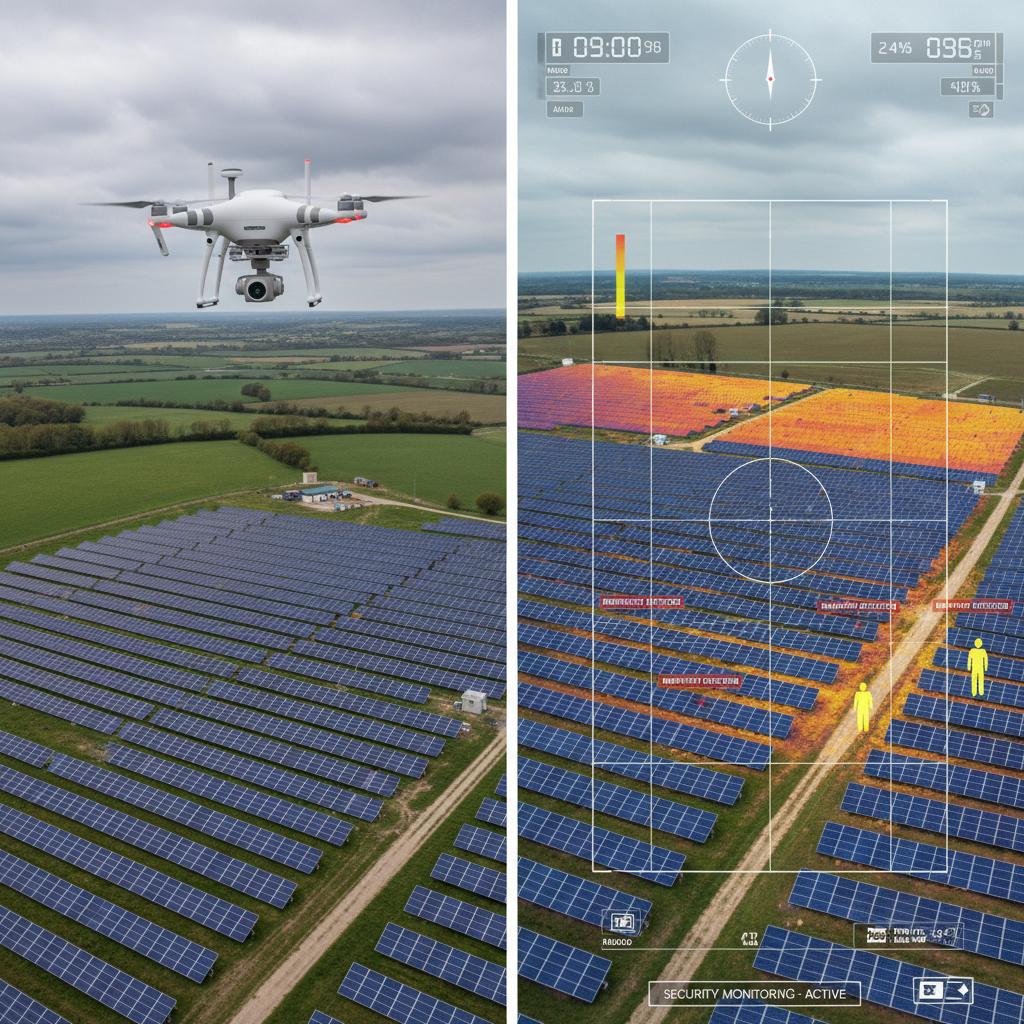
Thermal imaging cameras are particularly effective for solar farm security, as they can detect intruders even in complete darkness or adverse weather conditions. These systems can distinguish between human activity and wildlife, reducing false alarms whilst maintaining high security standards.
Motion Detection and Sensor Networks Sophisticated sensor networks can create invisible security barriers around solar installations. These systems use various technologies including infrared, microwave, and vibration sensors to detect unauthorised access attempts.
Modern sensor networks are designed to minimise false alarms caused by wildlife or weather conditions whilst maintaining high sensitivity to human activity. Integration with central monitoring systems ensures rapid response to genuine security threats.
GPS Tracking and Asset Protection Individual solar panels and high-value equipment can be protected using GPS tracking devices. These systems allow operators to track stolen equipment and provide valuable intelligence to law enforcement agencies.
Some tracking systems include tamper alerts that notify security personnel immediately when equipment is being interfered with, potentially allowing intervention before theft occurs.
Professional Security Services
24/7 Monitoring and Response Professional security monitoring services provide round-the-clock protection for solar farms. These services combine remote monitoring technology with trained security personnel who can assess threats and coordinate appropriate responses.
Rapid response capabilities are crucial for solar farm security. Professional security services can typically guarantee response times of under 30 minutes, significantly reducing the window of opportunity for criminals.
Mobile Security Patrols Regular security patrols provide both deterrence and detection capabilities. Professional security personnel can identify potential vulnerabilities, check that security systems are functioning correctly, and provide a visible security presence that deters criminal activity.
Randomised patrol schedules prevent criminals from identifying patterns that could be exploited. Modern patrol services use GPS tracking and digital reporting systems to provide detailed records of security activities.
Keyholding and Alarm Response Professional keyholding services ensure that authorised personnel can respond quickly to security alarms without compromising site security. These services maintain secure key storage and provide trained personnel who can safely investigate alarm activations.
Alarm response services should include protocols for coordinating with law enforcement agencies and emergency services when necessary. Clear escalation procedures ensure that serious incidents receive appropriate attention.
Developing an Integrated Security Strategy
Risk Assessment and Security Planning
Every solar farm requires a customised security strategy based on its specific risk profile. Factors to consider include location, size, accessibility, local crime rates, and the value of installed equipment.
Professional security assessments should evaluate both current vulnerabilities and potential future risks. This analysis should consider how security needs might change as equipment ages or as local crime patterns evolve.
Security planning should also consider the operational requirements of the solar farm. Security measures shouldn’t impede legitimate maintenance activities or emergency access requirements.
Layered Security Approach
The most effective solar farm security strategies use multiple layers of protection. This approach ensures that if one security measure fails or is bypassed, additional measures provide backup protection.
A typical layered security system might include perimeter detection, access control, CCTV monitoring, motion sensors, and rapid response capabilities. Each layer serves a specific purpose whilst contributing to overall security effectiveness.
Regular testing and evaluation of security layers ensures that the system continues to provide effective protection as threats evolve.
Integration with Local Law Enforcement
Building relationships with local police forces can significantly enhance solar farm security. Many police forces have rural crime teams that specialise in protecting remote installations and can provide valuable advice on local crime trends.
Information sharing between solar farm operators and law enforcement helps build intelligence about criminal activities and can lead to more effective prevention strategies.
Some areas have established solar farm security networks where operators share information about security incidents and coordinate response strategies.
Working with Professional Security Providers
Selecting the Right Security Partner
Choosing a professional security provider requires careful evaluation of capabilities, experience, and local presence. Providers should have specific experience with solar farm security and understand the unique challenges these installations face.
Look for security providers who offer integrated solutions combining technology, monitoring, and response services. Single-source providers can often deliver more effective coordination between different security elements.
Certification and licensing are crucial factors when selecting security providers. All security personnel should hold appropriate SIA licences, and companies should maintain relevant insurance coverage and industry certifications.
Service Level Agreements and Performance Monitoring
Clear service level agreements ensure that security providers deliver the level of protection required. These agreements should specify response times, monitoring standards, reporting requirements, and performance metrics.
Regular performance reviews help ensure that security services continue to meet requirements and provide value for money. These reviews should examine both quantitative metrics like response times and qualitative factors like customer service standards.
Flexibility to adapt services as requirements change is important for long-term security partnerships. Solar farm operators’ needs may evolve as sites mature or as threat levels change.
Cost-Effective Security Solutions
Balancing Security Investment with Risk
Effective solar farm security doesn’t necessarily require massive investment in the most sophisticated systems available. The key is matching security measures to actual risk levels and potential losses.
Cost-benefit analysis should consider not just the direct costs of security measures, but also the potential savings from prevented theft, reduced insurance premiums, and avoided downtime.
Phased implementation of security measures allows operators to spread costs over time whilst prioritising the most critical vulnerabilities.
Technology Solutions for Budget-Conscious Operators
Modern technology offers cost-effective security solutions that were previously only available to large installations. Wireless sensor networks, cloud-based monitoring systems, and mobile apps provide sophisticated security capabilities at reasonable costs.
Solar-powered security equipment aligns with the renewable energy mission whilst reducing ongoing operational costs. These systems can operate independently of grid electricity, making them ideal for remote installations.
Shared security services, where multiple solar farms in an area use the same monitoring and response services, can provide professional-grade security at reduced individual costs.
Insurance Considerations
Adequate insurance coverage is essential for solar farm operators, but security measures can significantly impact insurance costs and coverage terms. Many insurers offer reduced premiums for sites with comprehensive security systems.
Work with insurance providers to understand how different security measures affect coverage and costs. Some security investments may pay for themselves through reduced insurance premiums over time.
Ensure that insurance policies cover not just equipment replacement but also lost revenue during downtime periods. Business interruption coverage is particularly important for solar farm operators.
Future Trends in Solar Farm Security
Emerging Technologies
Artificial intelligence and machine learning are revolutionising solar farm security. These technologies can analyse vast amounts of sensor data to identify patterns and predict potential security threats before they occur.
Drone technology offers new possibilities for solar farm surveillance. Automated drone patrols can cover large areas quickly and provide detailed visual intelligence about potential security threats.
Integration with smart grid technology may provide new security capabilities, allowing operators to monitor not just physical security but also cyber security threats to solar farm control systems.
Regulatory Developments
Government initiatives to support renewable energy may include enhanced security requirements for solar installations. Operators should stay informed about potential regulatory changes that could affect security obligations.
Industry standards for solar farm security are evolving as the sector matures. Compliance with emerging standards may become necessary for insurance coverage or government incentives.
International best practices in solar farm security are being developed as countries worldwide grapple with similar challenges. These standards may influence UK requirements in the future.
Conclusion: Securing the Future of Solar Energy
The rise in solar farm theft represents a significant challenge for the renewable energy sector, but it’s not an insurmountable one. With proper planning, appropriate investment in security measures, and partnerships with professional security providers, solar farm operators can effectively protect their installations whilst maintaining operational efficiency.
The key to successful solar farm security lies in understanding that it’s not just about preventing crime – it’s about protecting the long-term viability of renewable energy investments. Every theft incident that’s prevented, every day of uninterrupted operation that’s maintained, contributes to the broader goal of sustainable energy production.
As the solar industry continues to grow, security considerations must evolve alongside technological advances. The operators who invest in comprehensive security strategies today will be best positioned to capitalise on the opportunities that renewable energy offers tomorrow. Professional security services play a crucial role in this equation.
Mango Solutions Limited specialises in protecting critical infrastructure with tech-driven security solutions that deliver results. Our comprehensive approach combines advanced GPS tracking, 24/7 monitoring, rapid response capabilities, and expert consultancy services tailored specifically for renewable energy installations. With 98% UK-wide coverage and average response times of under 30 minutes, we understand that solar farm security requires specialised knowledge, sophisticated technology, and immediate action when threats arise.
At Mango Solutions, we don’t just provide security – we deliver peace of mind. Our SIA-licensed professionals work around the clock to safeguard your investment, ensuring uninterrupted energy production and protecting the future of your renewable energy projects. From comprehensive risk assessments to cutting-edge monitoring systems, we’re your trusted partner in solar farm protection.
The future of solar energy depends on our ability to protect these valuable installations from criminal activity. With the right approach to security, we can ensure that solar farms continue to contribute to the UK’s renewable energy goals for decades to come.
For expert solar farm security solutions that combine innovation with reliability, contact Mango Solutions Limited today. Let us help you protect your renewable energy investment with our proven, tech-driven security services.