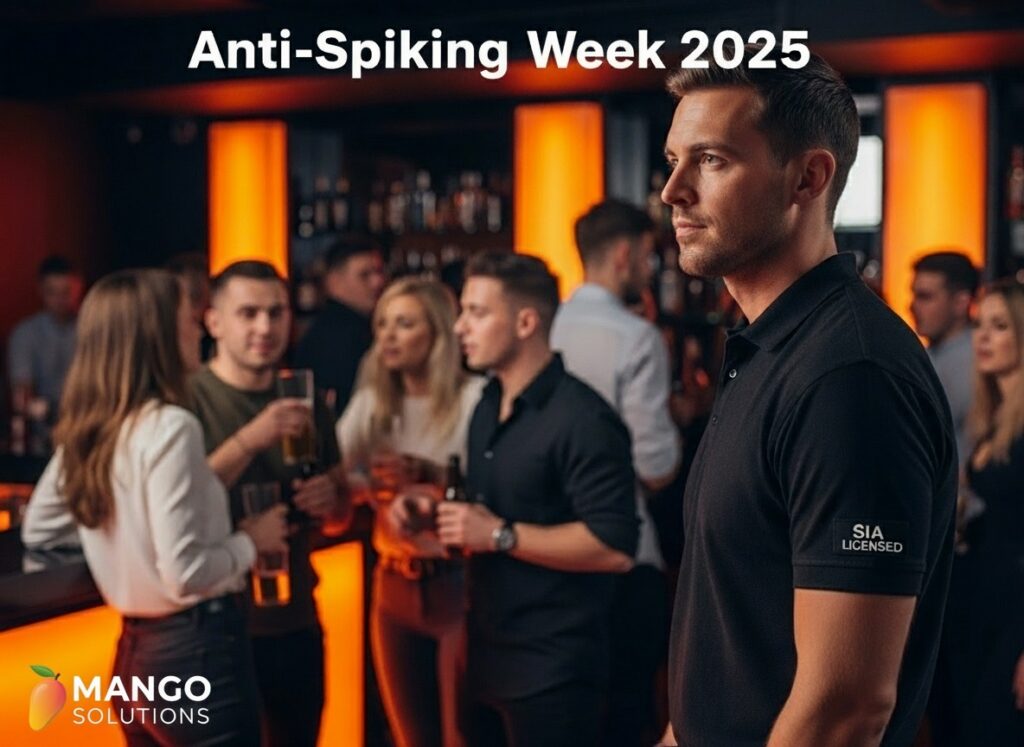
15-21 September marks Anti-Spiking Week across the UK. This year, the SIA are joining forces with police services nationwide to shine a light on one of society’s most insidious crimes.
As security professionals, we have a unique opportunity and responsibility to be the first line of defence against predators who prey on innocent people enjoying a night out.
Sarah’s Story: When One Drink Changes Everything
Picture this scene. Sarah’s celebrating her birthday with friends at a busy city centre pub. She’s had one drink. Maybe two at most. But suddenly she feels dizzy and confused. Her vision blurs. She can barely stand. Her friends think she’s had too much to drink. But something doesn’t feel right. Sarah has become another victim of spiking, a crime that’s far more common than most people realise.
What Is Spiking Really?
Here’s what many people don’t understand. Spiking isn’t just about slipping something into someone’s drink. The reality is much broader. And more frightening. Spiking means giving someone drugs or alcohol without their knowledge or consent.
It happens in three main ways:
- Drink spiking – Adding substances to any beverage
- Vape spiking – Tampering with electronic cigarettes
- Injection spiking – Using needles to inject substances
But here’s the truly sinister part. Spiking is rarely the end goal. It’s a tool. A weapon used to commit other serious crimes.
Like theft. Sexual assault. Robbery. The perpetrator wants to make their victim vulnerable. Unable to protect themselves. Unable to remember what happened.
Want to know more? Visit the official Police.uk spiking information page for comprehensive guidance.
The Numbers That Should Worry You
The statistics are sobering. 80% of reported spiking incidents happen in public places. Mainly pubs and nightclubs.
That means something important. If you work in hospitality or entertainment, you’re right at the heart of where these crimes occur.
The Security Industry Authority (SIA) knows this. They recognise that licensed security professionals like you are uniquely positioned to combat this crime.
Who’s Most at Risk?
The data tells a clear story:
- Average victim age: just 26 years old
- Women make up roughly three-quarters of all victims
Men can absolutely be victims too. But young women face the highest risk.
These aren’t just statistics on a police report. Each number represents someone’s daughter. Sister. Friend. Colleague.
Someone whose night out turned into a nightmare. Behind every case is a person who trusted they were safe. In what should have been a secure environment.
Why This Crime Is So Dangerous
Spiking is particularly challenging because it’s hidden. Unlike other crimes that are immediately obvious, spiking often goes undetected. Until significant harm has already occurred.
The substances used are typically:
- Colourless
- Odourless
- Tasteless
This makes them virtually impossible for victims to detect. Until the effects kick in.
The Lasting Damage
The psychological impact goes far beyond the physical effects.
Many survivors report feeling violated. Confused. Struggling with memory gaps that make it difficult to piece together what happened.
This leads to long-term problems:
- Anxiety
- Depression
- Reluctance to socialise
The ripple effects extend to friends and family who witness these incidents. Creating a broader climate of fear around nightlife. This is why your role is so crucial. You’re not just protecting individuals. You’re helping maintain the social fabric that allows people to enjoy themselves safely.
Your Training Kicks In: Spotting the Signs
Your SIA training requirements covered identifying vulnerability. And responding appropriately.
These skills apply directly to spiking prevention. Early recognition can be the difference between getting someone help quickly and a situation escalating. Into something far more serious.
Physical Red Flags
The effects vary. They depend on the substance. The dosage. The victim’s size and tolerance. But there are common warning signs:
Nausea and vomiting – Especially when it doesn’t match their alcohol intake.
Watch for people suddenly rushing to the toilet. Or looking pale after minimal drinking.
Listen for comments like:
- “I’ve only had one drink”
- “This doesn’t feel right”
Dizziness and unsteadiness – Someone who was walking normally earlier. Now suddenly struggling with balance. Or seeming confused about their surroundings. They might grab walls. Furniture. Other people for support. In ways that seem disproportionate to their drinking.
Blurred vision – Squinting. Rubbing eyes repeatedly. Difficulty focusing.
They might hold their phone very close. Or far away. Trying to bring things into focus.
Sudden extreme tiredness – This isn’t gradual evening fatigue. It’s overwhelming. Sudden onset drowsiness.
That doesn’t match the time. Or their alcohol consumption.
Becoming unresponsive – From becoming very quiet to complete unconsciousness.
Any unresponsiveness inconsistent with alcohol intake needs immediate medical attention.
Speech difficulties – Slurred speech disproportionate to drinking. Difficulty finding words. Speaking in ways friends describe as “not like them.”
Temperature problems – Suddenly feeling very hot or cold. Excessive sweating. Shivering despite the ambient temperature.
Behavioural Changes That Scream Danger
These often appear before severe physical effects:
Paranoia and anxiety – Sudden fearfulness. Nervous looking around. Expressing concerns that don’t match the situation.
They might feel unsafe. Or become confused about where they are.
Hallucinations – Talking to people who aren’t there. Reacting to things others can’t see. Seeming confused about their location.
Completely out of character behaviour – This is huge.
When friends say “This isn’t like them at all,” trust that observation. People who know the victim well spot changes first.
Loss of inhibition – Beyond what you’d expect from their alcohol consumption.
Inappropriate behaviour. Oversharing. Making decisions they’d never normally make.
Remember: this is a symptom of being drugged. Not a character flaw.
Memory problems – Repeatedly asking the same questions. Not recognising people they should know. Seeming confused about recent events.
Coordination issues – Beyond simple unsteadiness.
Difficulty with phones. Handling money. Simple tasks they managed earlier.
Know Your Enemy: Common Spiking Substances
You don’t need to identify specific drugs. But understanding their effects helps you recognise when someone needs immediate help.
Rohypnol (roofies) – The most well-known. Causes sedation. Confusion. Memory loss lasting several hours.
Victims often remember nothing.
GHB – Central nervous system depressant. Causes drowsiness. Confusion. Memory loss.
Particularly dangerous because the line between “effective” dose and fatal overdose is narrow.
Ketamine – Anaesthetic causing dissociation. Confusion. Memory problems.
Victims might seem conscious but unable to move or speak properly.
Benzodiazepines – Like Valium or Xanax. Cause sedation. Confusion. Memory loss. Especially when combined with alcohol.
Alcohol itself – Adding spirits to what victims think are low-alcohol drinks. Or adding alcohol to supposedly non-alcoholic beverages.
The Key Point
You don’t need to identify substances. Your job is recognising when someone’s condition doesn’t match their reported alcohol consumption.
Spotting Predators Before They Strike
Prevention beats reaction every time. Predatory behaviour follows recognisable patterns.
Environmental scanning – Someone constantly watching the room. Paying particular attention to who’s drinking what.
This isn’t normal social observation. There’s an intensity that feels predatory.
Suspicious drink interaction – Hands hovering near others’ drinks. Waiting for unattended moments. Quickly moving hands away when noticed.
Sometimes they’ll distract people specifically to access their drinks.
Targeting isolated individuals – Looking for people separated from friends. Appearing intoxicated. Or seeming vulnerable.
They approach with offers of help. Drinks. Or friendly conversation designed to lower guards.
Unusual interest in intoxicated people – Being overly helpful to drunk strangers. Especially trying to separate them from friends. Or convince them to leave.
Persistence despite rejection – Continuing to buy drinks after refusal. Insisting on “help” that’s been declined. Not taking no for an answer.
Group coordination – Sometimes teams work together. One distracting while another tampers with drinks.
Carrying suspicious items – Small containers. Vials. Packets that could contain substances. Handled secretively.
Your Prevention Toolkit
You have multiple tools to prevent spiking incidents:
Stay Visible and Unpredictable
Regular patrols serve two purposes:
- Catching perpetrators
- Deterring crimes
Criminals prefer operating unobserved. Vary your routes and timing to prevent predictability.
Trust Your Gut
Trust your instincts – If someone’s behaviour makes you uncomfortable, keep watching them.
Experienced security professionals develop intuition for trouble. Document suspicious behaviour.
Be Proactive
Proactive engagement – Don’t wait for people to approach you.
If someone shows spiking signs, approach them: “Are you alright? Do you need help?”
Create Safe Spaces
Provide safe spaces – Set up attended tables near toilets and smoking areas. Where people can safely leave drinks.
This shows customers you take their safety seriously.
Respond to Concerns
Respond to drink concerns – If someone reacts negatively to their drink, take action.
Or you notice visual changes:
- Discolouration
- Cloudiness
- Fizzing
- Separation
Suggest getting a fresh drink immediately.
Build Team Culture
Create safety culture – Work with bar staff to recognise spiking signs.
Foster team approaches where everyone watches out for customer welfare.
Working as a Team
Your effectiveness multiplies when you work with venue staff:
Train Your Bar Team
Train bar staff to watch for:
- Suspicious behaviour around the bar
- People overly interested in others’ drinks
- Attempts to distract bartenders during drink preparation
Communicate Effectively
Establish communication – Ensure staff know how to discreetly alert security. And vice versa.
Use:
- Hand signals
- Radio codes
- Other discrete methods
Implement Safety Measures
Safety measures that help:
- Drink covers
- Colour-changing detection straws
- Policies about unattended drinks
Coordinate with All Staff
Coordinate with floor staff – Waiters. Cleaners. Others move throughout venues. They observe from different angles.
Train them to spot and report concerns quickly.
Get Leadership Buy-In
Get management support – Ensure management understands the importance. And invests in:
- Training
- Equipment
- Procedures supporting prevention
When Prevention Fails: Your Response Saves Lives
Despite best efforts, incidents will occur. Your response can literally save lives.
Always prioritise victim welfare and safety.
Contact police immediately for suspected spiking. Find local force details at Police.uk.
For emergencies, call 999.
Medical Response First
First aid and assessment are your priority. Spiking can cause life-threatening complications.
Call ambulances for any concerns. Better safe than sorry.
Signs Needing Immediate Medical Attention
- Breathing difficulties or irregular patterns
- Unconsciousness or semi-consciousness
- Vomiting while unconscious (choking risk)
- Extremely slow heart rate
- Blue lips or fingernails (oxygen lack)
- Seizures or convulsions
- Extreme temperature changes
- Severe dehydration
- Allergic reaction signs
Assess Ongoing Safety
Assess ongoing safety – Are they with trusted people? Do they have safe transport home? Can they make safety decisions?
Sometimes staying at the venue until recovery is safest.
Position and Comfort
Position and comfort – Keep conscious victims sitting upright and talking.
Place unconscious victims in recovery position. Keep them warm but don’t give food or drink unless medically advised.
Monitor Continuously
Monitor continuously – Effects change rapidly. Someone stable can quickly deteriorate.
Never leave suspected victims unattended.
Preserve Evidence
Secure Physical Evidence
Secure the glass or bottle – Don’t let it get cleared away. Handle carefully to preserve fingerprints.
Use gloves if available. Or handle by the base.
Document Everything
Note CCTV details – Record exact times and locations. So footage can be quickly located before automatic deletion.
Document relevant camera angles.
Collect Witness Information
Collect witness information – People often help when they understand the seriousness.
Get contact details for police follow-up. Ask witnesses not to discuss the incident among themselves.
Your Documentation
Document everything – Record:
- Times
- Locations
- People present
- Observations
- Actions taken
This information is crucial for investigations and legal proceedings.
Digital Evidence
Preserve digital evidence – Ask witnesses not to delete photos/videos. Collect contact details for police to request copies later.
Assess Companions Carefully
This is delicate but crucial for victim safety.
Ask yourself:
- How well does the victim know these people?
- How concerned do they seem about the victim’s condition?
- Are they helping or eager to leave?
Red Flags Include
- Insisting on taking the victim home despite their condition
- Reluctance to wait for help or police
- Claims of friendship the victim doesn’t recognise
- Discouraging the victim from seeking help
- Nervousness when questioned
- Inconsistent stories about their relationship
- Pressure to leave immediately
Legitimate Companions
Legitimate companions will be:
- Genuinely concerned
- Cooperative with security and medical personnel
- Want proper help for the victim
If suspicious companions try leaving when police are mentioned, consider detention if safe. If not, note detailed descriptions and travel directions for police.
Legal Framework and Your Authority
Spiking is a serious criminal offence under multiple laws:
- Offences Against the Person Act 1861
- Sexual Offences Act 2003
For detailed information about your powers and responsibilities, consult SIA guidance documentation.
Key Points
- You can detain people with reasonable grounds for believing they’ve committed offences
- Use this power judiciously and only when safe
- Always call police for suspected spiking incidents
- Document everything for potential legal proceedings
- Act within your authority and follow proper procedures
Understanding Consent
Understanding consent is crucial. Spiked victims may not be able to give informed consent for:
- Medical treatment
- Going home with companions
When in doubt, involve medical professionals or police.
The Human Side: Supporting Victims
Technical skills matter. But never underestimate simple human compassion.
Spiking victims have experienced serious violations of their autonomy and safety.
Create Safe Environments
Create safe environments – Speak calmly. Explain your actions. Respect their dignity.
They may have limited memory and significant distress.
Maintain Dignity
Maintain dignity – Victims may be dishevelled or have been sick.
Provide:
- Privacy
- Clean clothing if available
- Ensure they’re not exposed to unnecessary scrutiny
Coordinate with Trusted Contacts
Coordinate with trusted contacts – Help them contact people who can ensure:
- Safe transport home
- Appropriate care
Verify relationships where possible.
Avoid Victim-Blaming
Avoid victim-blaming – Never suggest victims are responsible because of:
- Clothing choices
- Drinking habits
- Location choices
Spiking is always the perpetrator’s fault.
Respect Autonomy
Respect autonomy while ensuring safety – Try involving victims in care decisions while protecting them from harm.
Explain options clearly. Respect preferences where safe.
Understanding Long-term Impact
Recognising psychological impacts helps you provide better support:
Trauma Responses
Trauma responses – Shock. Denial. Anger. Emotional numbness are normal reactions.
Don’t judge how people respond.
Memory Issues
Memory issues – Gaps or fragmented recollections are common and distressing.
Reassure them this is normal from being drugged. Not making things up.
Trust Issues
Trust issues – Victims may become reluctant to socialise. Or struggle trusting new people.
Provide appropriate support and professional service referrals.
Secondary Victimisation
Secondary victimisation – Prevent this by taking all reports seriously. Treating victims with respect and compassion.
Physical After-effects
Physical after-effects – Fatigue. Nausea. Headaches can continue for days or weeks.
Encourage medical follow-up even if they seem recovered.
Level Up Your Skills: Training Opportunities
Fighting spiking requires proper training. The SIA has collaborated with the Safer Business Network to create comprehensive e-learning on welfare and vulnerability.
Including spiking content.
Find more information on the official SIA website.
What You Get
This Level 2 accredited Highfield qualification enhances your professional skills. While contributing to public safety.
It covers:
- Technical aspects
- Broader welfare contexts in licensed premises
How to Access
Limited spaces available for SIA licence holders.
To register or get the direct link:
- Contact the SIA business support line at 0300 123 9298
- Search “welfare and vulnerability training” on the SIA website
Keep Developing
Keep developing – Stay informed about:
- New trends
- Legislation changes
- Evolving best practices
Attend conferences. Join professional forums. Share knowledge with colleagues.
Technology: Your Digital Allies
Innovation increasingly supports anti-spiking efforts:
Detection Tools
Drink testing products – Colour-changing straws. Test strips. Nail polish detecting common drugs.
Not fool proof but provide additional protection layers.
Surveillance Upgrades
Enhanced CCTV – Better night vision. Facial recognition. AI-powered behaviour analysis.
Help identify suspicious activity faster.
Communication Apps
Mobile safety apps – Allow customers to discreetly alert security or request help.
Providing additional communication channels.
Environmental Improvements
Improved lighting and design – Reduce blind spots where predatory behaviour might occur unobserved.
Good lighting:
- Deters criminals
- Makes spotting distress easier
Information Sharing
Database systems – Allow venues to share information about banned individuals or suspicious behaviour.
Within legal constraints.
Building Your Network
Effective anti-spiking efforts need collaboration:
Police Partnerships
Police partnerships – Build relationships with local officers. Understand their procedures. Ensure effective communication during incidents.
Healthcare Partnerships
Healthcare partnerships – Work with local hospitals and ambulance services.
To improve:
- Response times
- Victim care
Understanding medical protocols helps you make better decisions about when to call for assistance.
Community Partnerships
Community partnerships – Connect with:
- Local women’s groups
- Student organisations
- Community stakeholders
To spread awareness and build prevention support. These groups offer valuable insights into potential victim experiences.
Industry Partnerships
Industry partnerships – Collaborate with:
- Other venues
- Security companies
- Hospitality businesses
To share intelligence about known offenders and effective strategies.
Educational Partnerships
Educational partnerships – Work with local colleges and universities.
To reach young people at higher risk. Many institutions eagerly partner with security professionals to improve student safety.
Support Service Partnerships
Support service partnerships – Connect with organisations helping victims of:
- Sexual assault
- Domestic violence
- Other crimes
To ensure spiking victims access appropriate ongoing support.
Your Impact Goes Beyond the Job
When you prevent a spiking incident or respond effectively, you’re doing far more than job duties.
You’re potentially preventing:
- Sexual assault
- Robbery
- Other serious crimes
You’re protecting someone’s physical and mental health. You’re maintaining your venue’s reputation and the broader hospitality industry’s integrity.
Every Action Counts
Every intervention matters. Even when you’re not certain spiking occurred, taking concerns seriously creates environments where:
- Potential perpetrators know they’re watched
- Potential victims know they’re protected
Building Trust
Building nightlife trust benefits everyone:
- Customers
- Businesses
- Communities
Your role in this ecosystem is significant and valued.
Economic Benefits
Economic impact matters too. Safe venues:
- Attract more customers
- Face fewer liability issues
Your professional approach contributes directly to your employer’s business success.
Social Benefits
Social impact extends beyond individual incidents. When people feel safe socialising, it contributes to:
- Community cohesion
- Mental health
- Overall quality of life
Real Talk: The Challenges You’ll Face
Let’s be honest. Preventing spiking isn’t always possible.
Recognising your role’s limitations helps focus efforts more effectively:
Resource Limits
Resource constraints mean you can’t be everywhere simultaneously.
Focus on:
- High-risk areas
- High-risk times
Work with venue staff to extend coverage.
Evolving Threats
Evolving criminal methods mean perpetrators constantly adapt techniques.
Stay informed about new trends. Prepare to adapt responses accordingly.
Legal Boundaries
Legal limitations sometimes mean you can only:
- Observe
- Report
- Support victims
Don’t exceed authority. But use available powers when appropriate.
Victim Cooperation
Victim cooperation isn’t always forthcoming. Some victims may be reluctant to report or accept help due to:
- Shame
- Fear
- Confusion
- Not understanding what happened
Respect autonomy while ensuring they have information for informed decisions.
Cultural Barriers
Cultural barriers might prevent some victims from seeking help.
Be aware of cultural sensitivities. Create inclusive environments where everyone feels safe seeking assistance.
Substance Complexity
Substance complexity means new drugs and combinations constantly appear.
You can’t identify every possible substance. But you can recognise when conditions don’t match reported alcohol consumption.
Measuring Success: How Do We Know It’s Working?
Success can be measured several ways:
Incident Tracking
Reduced incident rates are obvious measures. But difficult to track since many incidents go unreported.
Work with venue management to establish baselines and track changes.
Reporting Confidence
Increased reporting might initially seem negative. But often indicates victims feel more confident coming forward.
And incidents are taken more seriously. This can actually be positive.
Response Quality
Improved victim outcomes like:
- Faster medical response
- Better evidence preservation
- More successful prosecutions
Indicate effective response procedures.
Public Confidence
Enhanced public confidence in venue safety shows through:
- Customer feedback
- Online reviews
- Attendance figures
Safe venues see increased loyalty and positive word-of-mouth.
Professional Growth
Professional development across the security industry. Including increased training uptake and improved spiking knowledge.
Shows the message is reaching the broader community.
Team Confidence
Staff confidence in handling incidents. Measured through training feedback and incident debriefs.
Indicates when teams feel well-prepared and supported.
Looking Ahead: Building Lasting Change
Anti-Spiking Week isn’t just seven days of awareness. It’s about building lasting change in licensed premises safety.
The goal is creating environments where:
- Potential perpetrators know they’ll be caught
- Potential victims know they’re protected
Coordinated Response
Police collaboration across the UK recognises this problem requires coordinated responses.
Security professionals. Law enforcement. Venue operators. The public. All play roles in creating safer nightlife.
Continuous Learning
Ongoing vigilance is essential. Spiking techniques evolve. Our responses must evolve too.
Stay informed. Attend training updates. Share knowledge with colleagues.
Cultural Shift
Cultural change is perhaps the most important long-term goal.
We need cultures where:
- Consent is respected
- Bystanders intervene when seeing suspicious behaviour
- Victims are supported rather than blamed
Policy Support
Policy development at venue, local, and national levels can support your ground-level efforts.
Advocate for policies prioritising customer safety. And providing tools and authority you need for effective work.
Innovation
Research and development into new prevention technologies. Better training methods. More effective response procedures.
Will continue enhancing our spiking combat abilities. Stay engaged with developments. Prepare to adopt new approaches.
Your Personal Commitment
As we observe Anti-Spiking Week, reflect on your vital role in protecting the public.
Your training. Experience. Dedication. Uniquely position you to prevent these crimes and support victims when prevention fails.
Every Shift Matters
Every shift is an opportunity to make someone safer.
Every suspicious behaviour you investigate. Every vulnerable person you help. Every professional incident response.
Contributes to broader safety and protection cultures.
The Statistics Represent Opportunity
The spiking statistics are sobering. But they represent opportunity.
With proper training. Vigilant observation. Professional response. We can work together reducing these numbers.
And creating safer environments for everyone.
Your Development Matters
Your professional development in this area isn’t just career advancement.
It’s about becoming more effective at protecting people. And potentially saving lives.
Your learning investment pays dividends in everyone’s safety who enters your venue.
Your Influence Spreads
Your influence extends beyond your immediate workplace.
The professional standards you maintain. Knowledge you share with colleagues. Examples you set.
All contribute to raising industry standards.
Remember This
You’re not just a security professional. You’re:
- A guardian of public safety
- Protector of the vulnerable
- Crucial part of the solution to serious crime
Your work matters. Your vigilance saves lives. Your professionalism makes real differences in your community.
Take Action Today
This Anti-Spiking Week, commit to being more than observers.
Be active participants in creating safer, more secure nightlife environments for everyone.
Your Immediate Action List
- Review your spiking signs and symptoms knowledge
- Ensure you know your venue’s incident response procedures
- Check you have local police and medical services contact information readily available
- Consider additional training to enhance your skills
- Talk to your team about spiking prevention strategies
Make the Difference
Your commitment to preventing spiking and supporting victims can literally save lives.
And prevent serious crimes.
The person you help tonight might be someone’s daughter. Son. Partner. Friend.
Your professional response could be the difference between a bad night and life-changing trauma.
Together We’re Stronger
Together, we can create nightlife environments where:
- Everyone enjoys themselves safely
- Predators know they’ll be caught
- Victims know they’ll be believed and supported
That’s not just a professional goal. It’s a moral imperative defining what it means to be a true guardian of public safety.
The fight against spiking requires all of us. Security professionals. Venue staff. Police. The public.
Working together towards a common goal.
Your role isn’t just important. It’s essential.
Every person you protect. Every incident you prevent. Every professional response you provide.
Makes our communities safer for everyone.
When we stand together against spiking, we’re standing up for basic human dignity. Safety. Everyone’s right to enjoy themselves without fear.
Useful Resources:
- Police.uk – Spiking Information and Reporting
- Security Industry Authority (SIA) Official Website
- SIA Business Support Line: 0300 123 9298 – Call for direct access to the free welfare and vulnerability e-learning course
- Report Suspicious Activity to Police
- Emergency Services: 999
- Drink Aware – Staying Safe
For immediate concerns about spiking incidents, always contact your local police force or call 999 in emergencies. For SIA licence queries and training information, including direct registration for the free welfare and vulnerability course, contact the SIA business support line at 0300 123 9298.