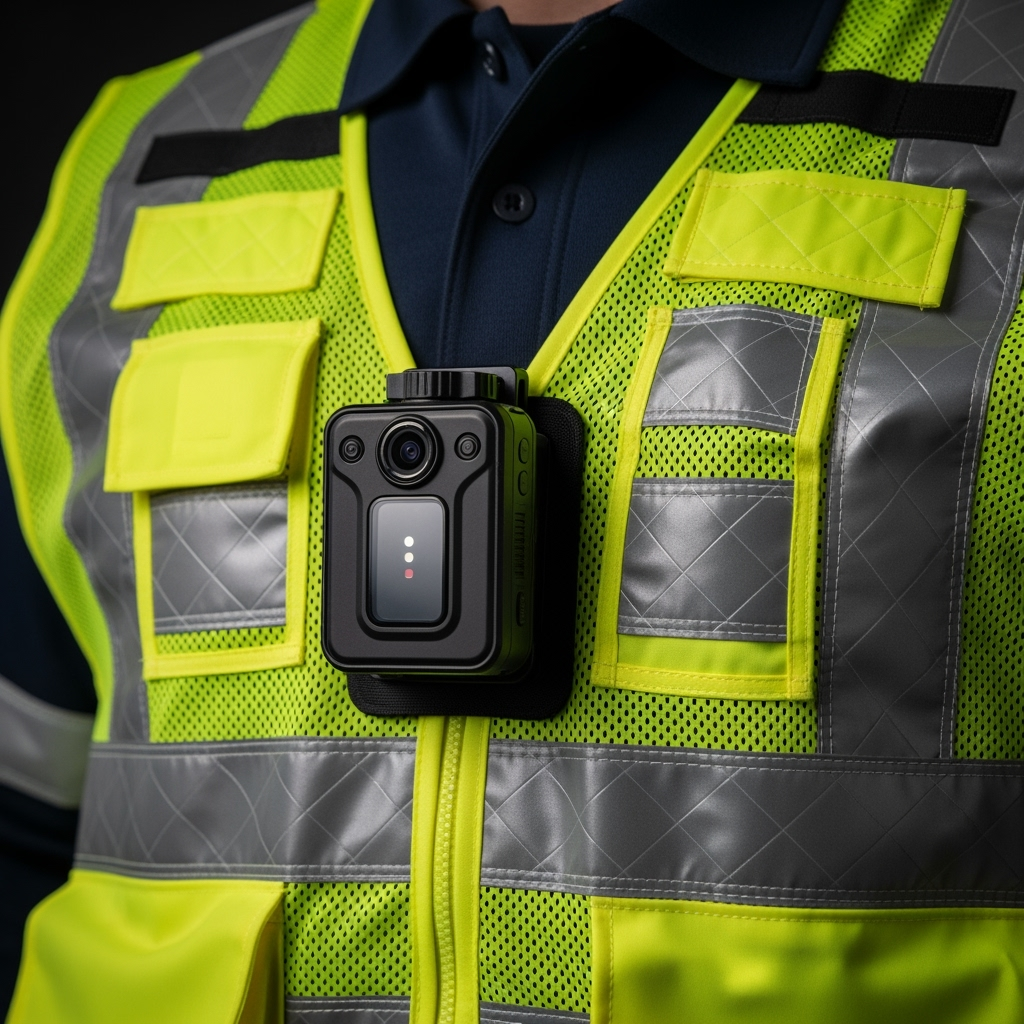
In today’s security landscape, accountability and evidence collection have become paramount concerns for both security providers and their clients. Body worn cameras (BWCs) have emerged as a game-changing technology that not only enhances operational effectiveness but also builds trust between security personnel, clients, and the public. Let’s explore why these devices are becoming indispensable tools for professional security officers.
Enhanced Evidence Collection and Documentation
Body worn cameras provide irrefutable, real-time documentation of incidents as they unfold. Unlike written reports that rely on memory and subjective interpretation, BWC footage captures:
- Accurate chronology of events – Every detail is preserved in the exact sequence it occurred
- Audio and visual context – Conversations, environmental factors, and behavioural nuances that written reports might miss
- Unbiased perspective – Objective recording that eliminates disputes about what actually happened
- Legal admissibility – High-quality evidence that stands up in court proceedings
This comprehensive documentation proves invaluable for investigations, insurance claims, and legal proceedings, often resolving disputes that might otherwise become lengthy and costly affairs.
Protection for Security Personnel
One of the most significant benefits of BWCs is the protection they afford security officers themselves. These devices serve as:
Deterrent Against False Accusations Security personnel often work in challenging environments where tensions can run high. BWCs provide concrete evidence of professional conduct, protecting officers from unfounded complaints or allegations of misconduct.
Validation of Appropriate Response When security officers must take decisive action, BWC footage demonstrates that their response was proportionate and justified, supporting them in any subsequent review or investigation.
Enhanced Personal Safety The visible presence of a recording device often de-escalates potentially volatile situations, as individuals are less likely to engage in aggressive behaviour when they know they’re being recorded.
Improved Training and Performance Management
BWC footage serves as an excellent training resource, allowing security companies to:
- Conduct realistic scenario training using actual incidents
- Identify best practices and share successful de-escalation techniques
- Address performance issues with concrete examples rather than subjective assessments
- Demonstrate compliance with company procedures and industry standards
This evidence-based approach to training and development leads to more skilled, confident security personnel who can handle challenging situations more effectively.
Building Client Confidence and Trust
For security service providers, BWCs offer significant business advantages:
Transparency and Accountability Clients gain confidence knowing that security operations are being conducted professionally and can be independently verified.
Quality Assurance BWC footage provides tangible proof of service delivery, demonstrating value and justifying security investments.
Risk Mitigation Comprehensive incident documentation helps clients manage their own liability risks and supports insurance claims when necessary.
Administration and Control Measures for BWC Footage
Whilst the benefits of body worn cameras are clear, their implementation requires robust administrative controls to ensure compliance with data protection legislation and maintain the integrity of recorded evidence.
Data Classification and Handling
All BWC footage must be treated as personal data under the UK General Data Protection Regulation (UK GDPR) and Data Protection Act 2018. This classification demands:
- Lawful basis for processing – Clear justification for recording and retaining footage
- Proportionate use – Recording only when necessary and relevant to security objectives
- Transparent notification – Informing individuals they are being recorded where practical
Secure Storage Infrastructure
Encryption Requirements
- All footage must be encrypted during transfer from device to storage system
- Storage systems must employ robust encryption both at rest and in transit
- Access credentials must be protected with strong authentication measures
Access Controls
- Implement role-based access with the principle of least privilege
- Maintain detailed access logs showing who viewed footage and when
- Regular access reviews to ensure only authorised personnel retain access
Physical Security
- Storage systems must be housed in secure, access-controlled environments
- Backup systems should be geographically separated to prevent total data loss
- Environmental controls to protect against fire, flood, and other disasters
Retention and Disposal Policies
Standard Retention Period
- Routine footage: 31 days unless required for ongoing investigations
- Investigation-related footage: Retained until legal proceedings conclude
- Training footage: Retained with appropriate anonymisation where possible
Secure Disposal
- Automated deletion systems to ensure timely disposal
- Cryptographic erasure for encrypted storage systems
- Detailed disposal logs for audit purposes
- Regular audits to verify disposal procedures are followed
Data Subject Rights Management
Subject Access Requests (SARs)
- Established procedures for handling requests for personal data
- Secure methods for verifying requester identity
- Timely response within statutory deadlines
- Appropriate redaction to protect third-party privacy
Disclosure Protocols
- Clear criteria for sharing footage with law enforcement
- Formal approval processes involving Data Protection Officers
- Comprehensive disclosure logs for audit trails
- Legal review for complex disclosure requests
Operational Procedures
Device Management
- Secure issuance and return procedures
- Regular maintenance and software updates
- Tamper-evident storage when not in use
- Clear accountability for device custody
Recording Protocols
- Mandatory activation for specific incident types
- Clear guidelines on when recording should cease
- Prohibition of personal or unauthorised use
- Documentation requirements for activation decisions
Quality Assurance
- Regular audits of BWC usage and data handling
- Compliance monitoring and reporting
- Incident investigation procedures for policy breaches
- Continuous improvement based on lessons learned
Training and Awareness
Comprehensive Staff Training All personnel authorised to use BWCs must receive training covering:
- Legal and ethical considerations
- Proper device operation and maintenance
- Data protection responsibilities and procedures
- Incident documentation and reporting requirements
Ongoing Education
- Regular updates on legislative changes
- Refresher training on policies and procedures
- Sharing of best practices and lessons learned
- Assessment and certification programmes
Governance and Oversight
Data Protection Officer (DPO) Responsibilities
- Regular compliance audits and reviews
- Investigation of data breaches or policy violations
- Liaison with regulatory authorities
- Staff guidance and support on data protection matters
Management Oversight
- Regular policy reviews and updates
- Resource allocation for compliance activities
- Performance monitoring and reporting
- Strategic planning for technology upgrades
Conclusion: A Foundation for Professional Security Services
Body worn cameras represent more than just technological advancement—they embody a commitment to professionalism, transparency, and accountability that defines modern security services. When implemented with robust administrative controls and data protection measures, BWCs provide compelling benefits for security officers, clients, and the public alike.
The investment in BWC technology and supporting infrastructure demonstrates a security provider’s dedication to excellence and regulatory compliance. As the security industry continues to evolve, organisations that embrace these technologies whilst maintaining the highest standards of data protection will distinguish themselves as leaders in professional security services.
For security companies considering BWC implementation, the key to success lies not just in the technology itself, but in developing comprehensive policies, procedures, and training programmes that ensure these powerful tools are used responsibly and effectively.